
GasPulse guides · Updated October 15, 2026
State averages vs. local gas-station prices
A weekly observation, a daily modeled estimate, and a forecast answer different questions. Read the source, date, fuel, and coverage before comparing a GasPulse number with a station’s sign.
What each kind of price means
Official weekly observations: GasPulse uses EIA’s published survey-based regular-gasoline and on-highway diesel averages. EIA samples retail outlets and weights the results by sales volume. The published average is itself a statistical estimate of a market; it is not a quote from every station.
Daily modeled estimates: Between weekly releases, GasPulse can show a separately labeled estimate based on dated EIA inputs. It is a GasPulse model output, not a new EIA retail survey or a fresh station-price observation. Look for the estimate label, date, and coverage; a daily date does not make it an independently measured state average.
Outlook projections: Outlook describes possible future price movement and uncertainty. GasPulse uses a published forecast when available and can fall back to an on-device projection based on historical prices. Projections can be unavailable or withheld when stale. Neither the direction nor a confidence range guarantees a future pump price or a saving.
State selections do not always mean state measurements
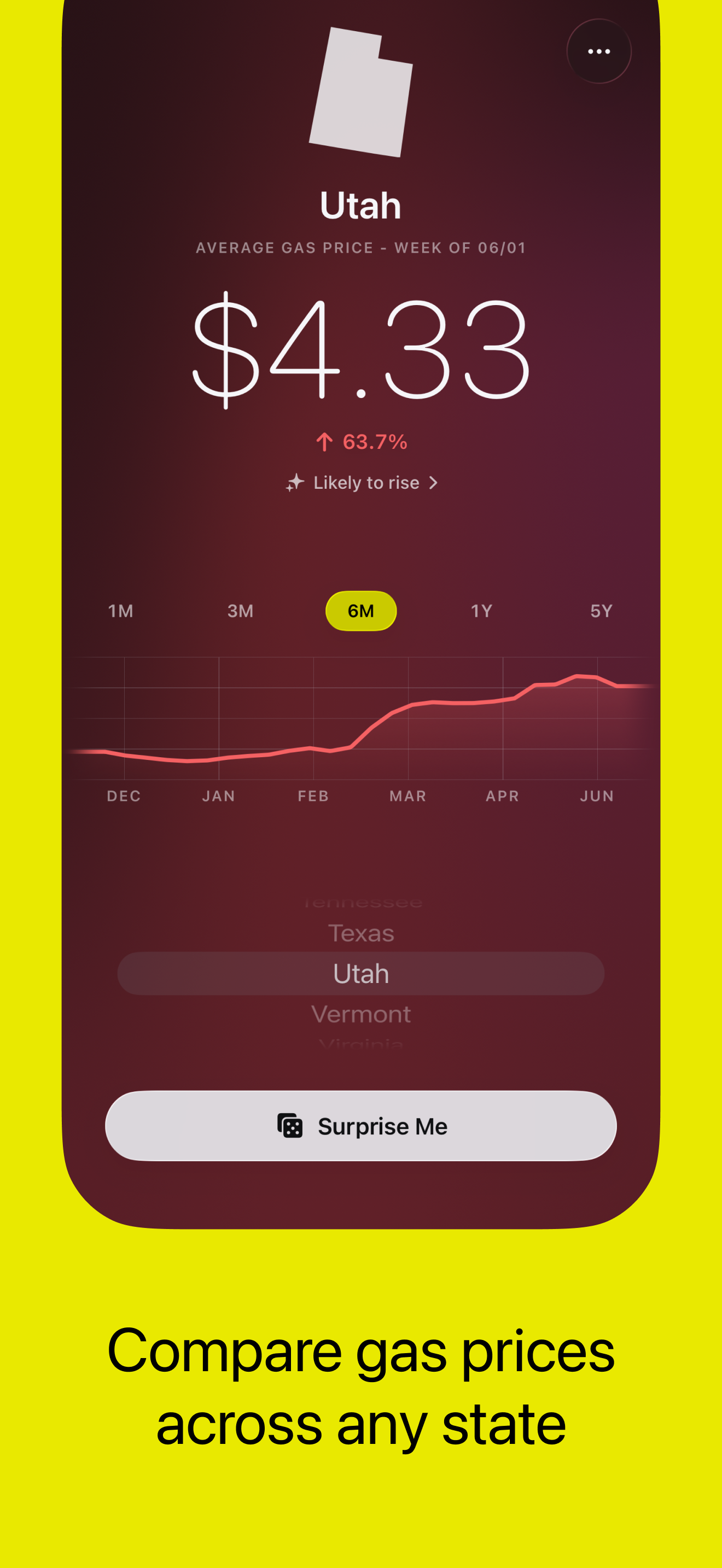
Official weekly gasoline observations have state-level coverage for nine states. Other state selections use a labeled EIA regional series. For diesel, California has its own series; other states use regional diesel averages. Daily estimates may also use regional proxies. Multiple selections can therefore share the same underlying figure.
Coverage follows the source series, not the shape of a state on screen. For example, a California diesel observation and a broader regional diesel average describe different markets. EIA’s on-highway diesel survey covers the contiguous United States and excludes Alaska and Hawaii; an app selection using a proxy is not an independent local survey of either state. Check the app’s coverage details before comparing areas.
The date is part of the price
EIA’s weekly surveys describe Monday-morning prices. Publication and app retrieval happen separately. A current weekly observation can be several days old, and a successful refresh does not change its observation date. Read the observation and publication schedule.
When fresh estimates are unavailable, GasPulse can show dated weekly, cached, or bundled data. That is fallback data, not proof of a fresh collection. Compare the latest published source for the same fuel and geography; keep any unavailable or stale-data message in view.
A station price describes a purchase
A station’s posted price is specific to that location and fuel option. Check the grade, payment conditions, taxes, and membership terms. A regular-gasoline average is not a like-for-like premium-gas or diesel quote. Local costs and competition can put a station above or below the wider average.
Four checks before comparing prices
- Same fuel? Compare regular gasoline with regular gasoline, or on-highway diesel with on-highway diesel.
- Same geography? Read whether the source is a state observation, regional average, or proxy.
- Same time and kind? Compare matching observation dates. Keep weekly survey averages, daily modeled estimates, and future projections separate.
- Same purpose? Use an average and its history for context; use a station’s posted offer for a purchase decision.
Where GasPulse fits
GasPulse helps you follow gas and diesel movement through area averages, history, and a qualified outlook. It does not list nearby stations or claim to find the cheapest gallon. Learn how to track trends on iPhone or set up regular-gas widgets.
Sources: EIA gasoline survey methodology, EIA diesel survey methodology and coverage, and the latest EIA Gasoline and Diesel Fuel Update. For GasPulse-specific labels and fallback behavior, see support and data-source answers.